Understanding how to distinguish outpatient cystitis from inpatient-requiring pyelonephritis is core Step 2 CK logic. Within the first 100 words, it’s crucial to highlight that UTI vs pyelonephritis outpatient management questions assess your ability to identify red flags, determine systemic involvement, and apply guideline-based antimicrobial choices. Vignettes challenge your ability to: identify instability; assess renal involvement; detect sepsis risk; differentiate complicated from uncomplicated infections; and decide when imaging, admission, or escalation of antibiotics is warranted. These questions often have time-pressured subtleties—pregnancy, diabetes, obstruction, male sex, fever patterns, and hemodynamic status all influence management.
Step 2 CK questions often bury cues such as nausea/vomiting preventing oral intake, CVA tenderness, tachycardia, rigors, or the presence of pyuria with WBC casts. Your task is not simply diagnosing the infection but determining the safest—and guideline-supported—management environment. Many learners incorrectly escalate all flank pain cases to inpatient care, or under-recognize high-risk patients needing IV antibiotics. Exam writers deliberately add labs or vitals that seem normal but hide instability: a borderline BP of 98/62, mild lactate elevation, or new leukocytosis with bands.
This article will give you: (1) a practical algorithm for outpatient vs inpatient care; (2) evidence-based antibiotic pathways; (3) specific Step 2 CK red-flag identifiers; (4) high-yield tables comparing UTI vs pyelonephritis; and (5) exam-style traps to avoid. When you pair this logic with tools like the MDSteps Adaptive QBank—with over 9000 scenario-based questions—you reinforce clinical patterns that mirror NBME priorities.
On Step 2 CK, UTIs are tested less as microbiology and more as clinical decision-making problems. The exam distinguishes between: (1) uncomplicated cystitis, (2) uncomplicated pyelonephritis, and (3) complicated UTI with risk factors or systemic compromise. Accurate classification determines antibiotic route, setting of care, and need for imaging. Uncomplicated cystitis typically presents with dysuria, frequency, urgency, and suprapubic pain without systemic signs. Pyelonephritis, by contrast, adds flank pain, fever, chills, nausea, or vomiting. The challenge arises when symptoms overlap, are subtle, or appear in high-risk hosts.
Complicated UTI refers to infection in patients with structural, functional, or immunologic risk factors that heighten severity. These include diabetes, pregnancy, urinary obstruction, renal stones, recent instrumentation, transplant status, and male anatomy. In these patients, even mild pyelonephritis may require inpatient treatment due to the risk of rapid progression or treatment failure. Step 2 CK frequently asks you to identify subtle complications such as hydronephrosis from an obstructing stone, which mandates urgent urology involvement rather than standard outpatient care.
Step 2 CK asks whether the patient can be safely treated outside the hospital. The exam rewards your ability to recognize the “stable, reliable outpatient.” This means: normal or near-normal vitals; ability to tolerate oral intake; absence of red-flag comorbidities; no signs of sepsis; and no concern for obstruction. Exam writers expect you to quickly scan for hypotension, persistent vomiting, altered mental status, and pregnancy—all of which shift management toward inpatient care.
A young, nonpregnant woman with dysuria, normal vitals, and mild flank discomfort but no vomiting is usually a candidate for outpatient therapy. The exam emphasizes that pyelonephritis can often be treated as an outpatient with oral fluoroquinolones or trimethoprim-sulfamethoxazole—unless red flags are present. Learners often miss vomiting as a critical factor: inability to maintain oral hydration or oral medication equals IV therapy and possible admission.
MDSteps helps you decide whether the stem is asking you to stabilize, test, treat, monitor, admit, discharge, counsel, prevent, or reassess.
The Step 2 CK default is: admit patients with sepsis criteria, severe pain, persistent vomiting, pregnancy, obstruction, immunosuppression, or failed outpatient therapy. Hypotension, tachycardia, rigors, or acute kidney injury also point to inpatient IV antibiotics and monitoring. If the vignette mentions a renal stone with hydronephrosis, management escalates: urgent decompression via nephrostomy or stent becomes the priority. Additionally, pregnancy changes the entire decision tree. A pregnant patient with pyelonephritis requires inpatient IV antibiotics due to increased risks of preterm labor and sepsis.
Step 2 CK expects familiarity with first-line outpatient options for cystitis—nitrofurantoin, TMP-SMX, and fosfomycin—and oral therapies for pyelonephritis such as fluoroquinolones or TMP-SMX. Inpatient pyelonephritis calls for IV ceftriaxone, ertapenem for ESBL risk, or broader therapy in septic patients. The exam frequently tests regional resistance patterns, intolerance of oral fluids, and when to transition from IV to oral therapy. Male patients with UTI or prostatitis-like features generally need longer therapy and sometimes inpatient monitoring.
Imaging is not required for routine cystitis or uncomplicated pyelonephritis. But Step 2 CK expects you to order imaging—usually CT abdomen/pelvis without contrast—when obstruction, abscess, or stones are suspected. Ultrasound is preferred in pregnancy. Imaging becomes critical with persistent fever after 48–72 hours of appropriate therapy, suggesting abscess formation or obstruction. Likewise, diabetics with severe infection may develop emphysematous pyelonephritis, which mandates urgent imaging and aggressive inpatient care.
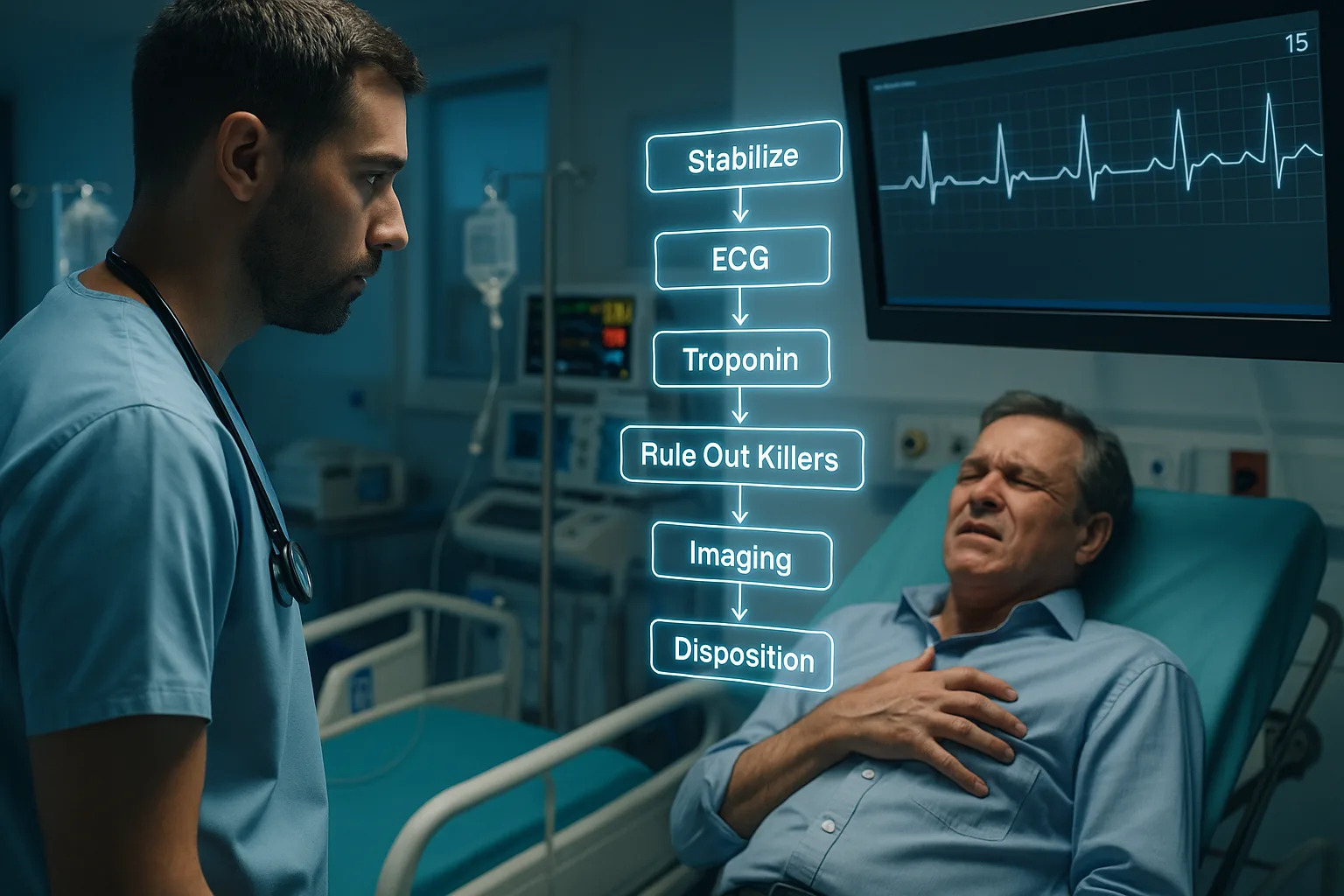
Use this decision flow as Step 2 CK exam logic:
This mirrors the decision-making patterns used in the MDSteps Adaptive QBank, allowing you to practice real-world algorithmic cases that resemble NBME logic.
Medically reviewed by: John Marks, MD, Internal MedicineWhy UTI vs Pyelonephritis Management Decisions Matter on Step 2 CK
How Step 2 CK Differentiates Cystitis, Pyelonephritis, and Complicated UTIs
Feature
Uncomplicated Cystitis
Pyelonephritis
Complicated UTI
Key Symptoms
Dysuria, frequency
Fever, flank pain, N/V
Variable + risk factors
Systemic Signs
Absent
Common
Possible or likely
WBC Casts
No
Yes
Possible
Management
Outpatient PO
PO or IV depending on severity
Often requires admission
Outpatient Criteria for UTI and Pyelonephritis: What the Exam Expects You to Recognize
Patient management questions are easier when you know the next clinical task.
Knowing the diagnosis is not enough if the exam asks what to do next.
Inpatient Admission Criteria: Red Flags, Instability, and Complications
High-Yield Antibiotic Choices: Oral vs IV Therapy Based on Setting
Imaging Decisions: When CT or Ultrasound Changes Step 2 CK Management
Algorithm: Outpatient vs Inpatient Management of UTI and Pyelonephritis
Rapid-Review Checklist
References
Algorithms & Diagnostics
UTI vs Pyelonephritis on Step 2 CK: How to Choose Outpatient vs Inpatient Management Using Exam Logic

For patient management and next-best-step decisions
Knowing the diagnosis is not enough if the exam asks what to do next.
Practice treatment timing, stabilization, monitoring, reassessment, disposition, prevention, counseling, and follow-up decisions inside realistic stems.
Full access includes Step 1, Step 2 CK, Step 3, CCS cases, analytics, auto-flashcards, and study planning.
Next-step decisions
Practice treatment, testing, monitoring, disposition, counseling, and prevention choices.
Safety-first logic
Train stability, contraindications, urgency, escalation, and follow-up reliability.
Reassessment loop
Learn when to treat, wait, recheck, escalate, or close the plan.
Next-best-step problem?
Management decision practice
Next-step decisionsSafety-first sequencingDisposition and follow-up logic
Start with a free reasoning review. Full access includes clinical management blocks, Step 3 CCS, analytics, flashcards, and study planning.
Patient management
Still missing the same kinds of questions?
Read why that happens.