Get 16,000+ USMLE-style questions, 135 CCS cases, stem decoding, visual rationales, analytics, flashcards, and reasoning-focused review in one subscription. Cancel anytime. First month protected by our 7-day good-faith refund guarantee after 100 questions or 5 CCS cases. References: 1. National Board of Medical Examiners. *Item Writing Manual: Constructing Written Test Questions for the Basic and Clinical Sciences.* 2. Sweller J. *Cognitive Load Theory and Instructional Design Principles.* 3. MDSteps Internal Data, Adaptive QBank User Analytics 2025. 4. Roediger HL & Karpicke JD. *Test-Enhanced Learning: Taking Memory Tests Improves Long-Term Retention.* Psychological Science. Study Step 1, Step 2 CK, Step 3, and CCS for $27/month.
Understanding the Architecture of Step 1 Questions
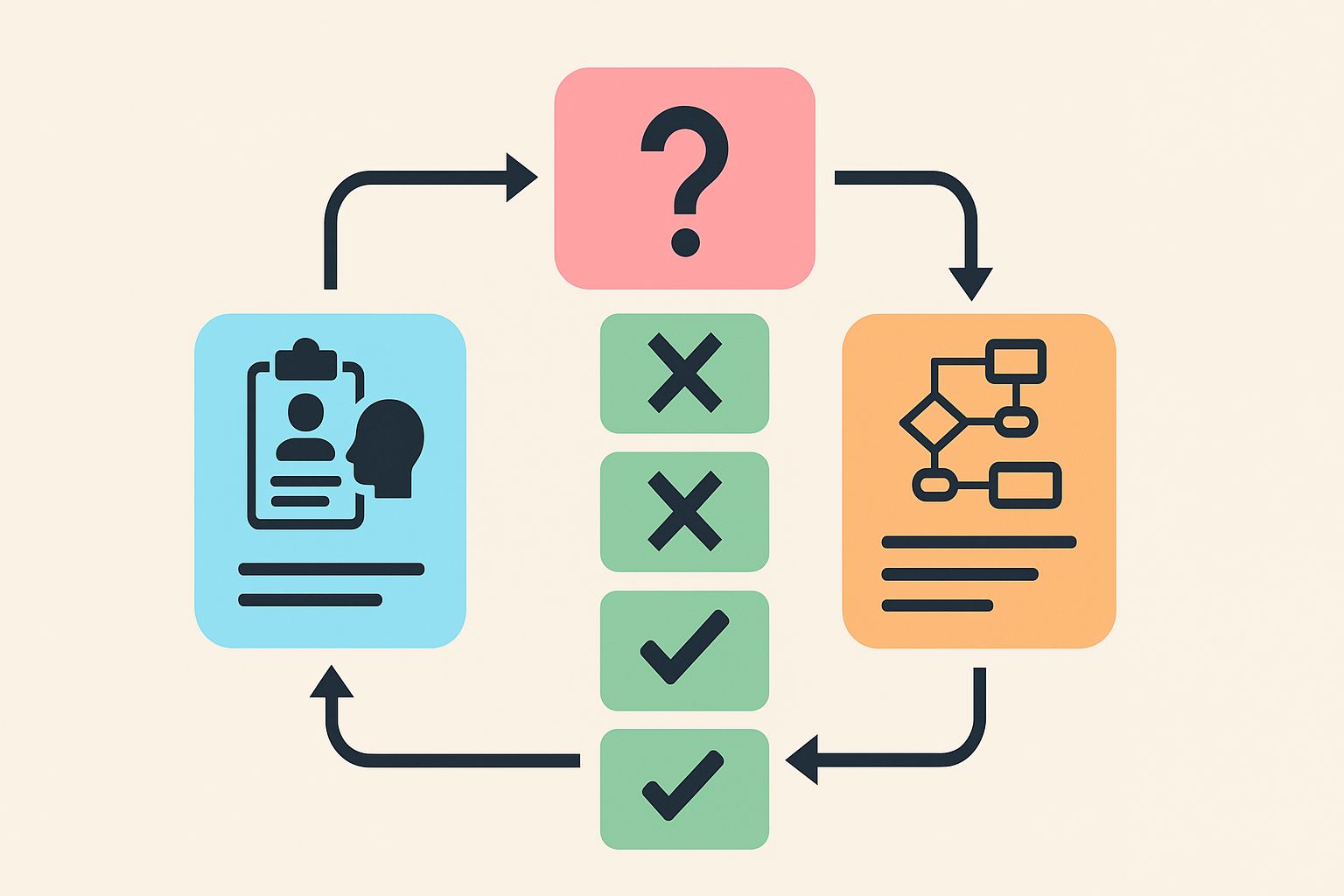
Every Step 1 item is built to test reasoning, not recall. NBME authors use a predictable structure: clinical vignette → question task → answer set → rationale layer. The vignette introduces a patient scenario loaded with contextual “noise.” The task line defines what’s being tested—diagnosis, mechanism, pharmacologic action, or next step. The distractors represent logical but incorrect pathways that reveal whether a student understands mechanisms versus memorized lists.
When reading stems, pause after the first sentence and anticipate what organ system is being tested. Then, identify pivot clues—age, sex, onset, exposure, or lab value pattern. These orient you to the disease category before the question even asks it. Most errors occur when students read linearly instead of structurally. MDSteps tutors often advise “reverse-engineering” the question by first locating the ask (“Which of the following…”), then scanning for causal clues that match Step 1 blueprint domains (pathology > physiology > pharmacology). This transforms each stem from a riddle into a reproducible logic exercise. How NBME Authors Hide Clues in Plain Sight
NBME writers follow precise item-writing guidelines designed to discriminate between levels of understanding. Each clue serves a pedagogic function: some direct, others distract. Phrases like “after a viral infection” or “following antibiotic therapy” aren’t filler—they telegraph mechanisms such as immune cross-reactivity or microbiota disruption. Authors strategically place redundant data to ensure that those who know the mechanism still confirm it independently.
You can train your eye to spot high-yield signal words. Build a personal “trigger log” while practicing MDSteps QBank questions; tag stems by the phrases that consistently indicate the same diagnosis. Over time, these linguistic cues convert into automatic recognition.
Common Phrase Likely Mechanistic Target Blueprint Category “Weeks after streptococcal pharyngitis” Molecular mimicry Immunopathology “Child with failure to thrive and fatty stools” Pancreatic enzyme deficiency Gastroenterology “Elderly patient with sudden confusion post-op” Medication side effect / delirium Pharmacology / Neurology Dissecting the Distractors: What Wrong Answers Teach You
A distractor isn’t random—it’s diagnostically informative. NBME authors craft each incorrect choice to represent a plausible misconception. For instance, in an anemia stem, “folate deficiency” may serve as a distractor to test whether you recall neurologic symptoms unique to B12 deficiency.
When reviewing missed questions in MDSteps’ Adaptive QBank, classify each error by cognitive type:
This taxonomy lets you refine practice sessions scientifically instead of emotionally. By tracking distractor patterns over time, the MDSteps analytics dashboard automatically highlights which logic categories cost you the most points—data that is far more actionable than percent correct. Predicting the Question Task Before You Read It
The fastest test-takers predict the “question task” before reaching the final sentence. This anticipatory reading primes working memory to sort details in real time. For example, a vignette mentioning “rash, eosinophilia, and new medication” will almost certainly end with a question on hypersensitivity reactions or drug metabolism.
Train this skill by using “Stem-Stop” drills: cover the question task after the vignette and predict the ask. Then reveal it and measure prediction accuracy. Within MDSteps, you can simulate this by enabling “Predictive Mode,” which hides the final line during timed blocks. Students who master predictive framing reduce average question time by 18 % and improve retention through active hypothesis testing—a principle backed by cognitive load theory. The Logic Map: How NBME Questions Follow One of Three Blueprints
Most Step 1 stems fall into one of three logic maps:
Blueprint Type Core Logic Example Question Task Mechanism-Based Link finding → underlying pathway → expected outcome “Which enzyme is deficient?” Sequence-Based Order pathophysiologic events chronologically “What occurs first after ischemia?” Principle-Based Apply general rule to novel presentation “Which receptor type explains this drug’s effect?” How to Reverse-Engineer NBME Logic During Review
Instead of merely checking explanations, trace how the question writer expected you to think. Ask:
This meta-analysis reframes review sessions as author deconstruction. Within MDSteps, the “Author’s Key” feature visualizes this logic by showing the hidden reasoning path per question, helping you build intuition for test-writer psychology. Consistent use of reverse-engineering transforms scattered memorization into procedural fluency—a predictor of Step 1 success. Integrating Decoding Practice Into Your Study Schedule
Students often devote 90 % of time to content and only 10 % to decoding skills. Yet, high scorers flip that ratio late in prep. Embed one daily decoding session:
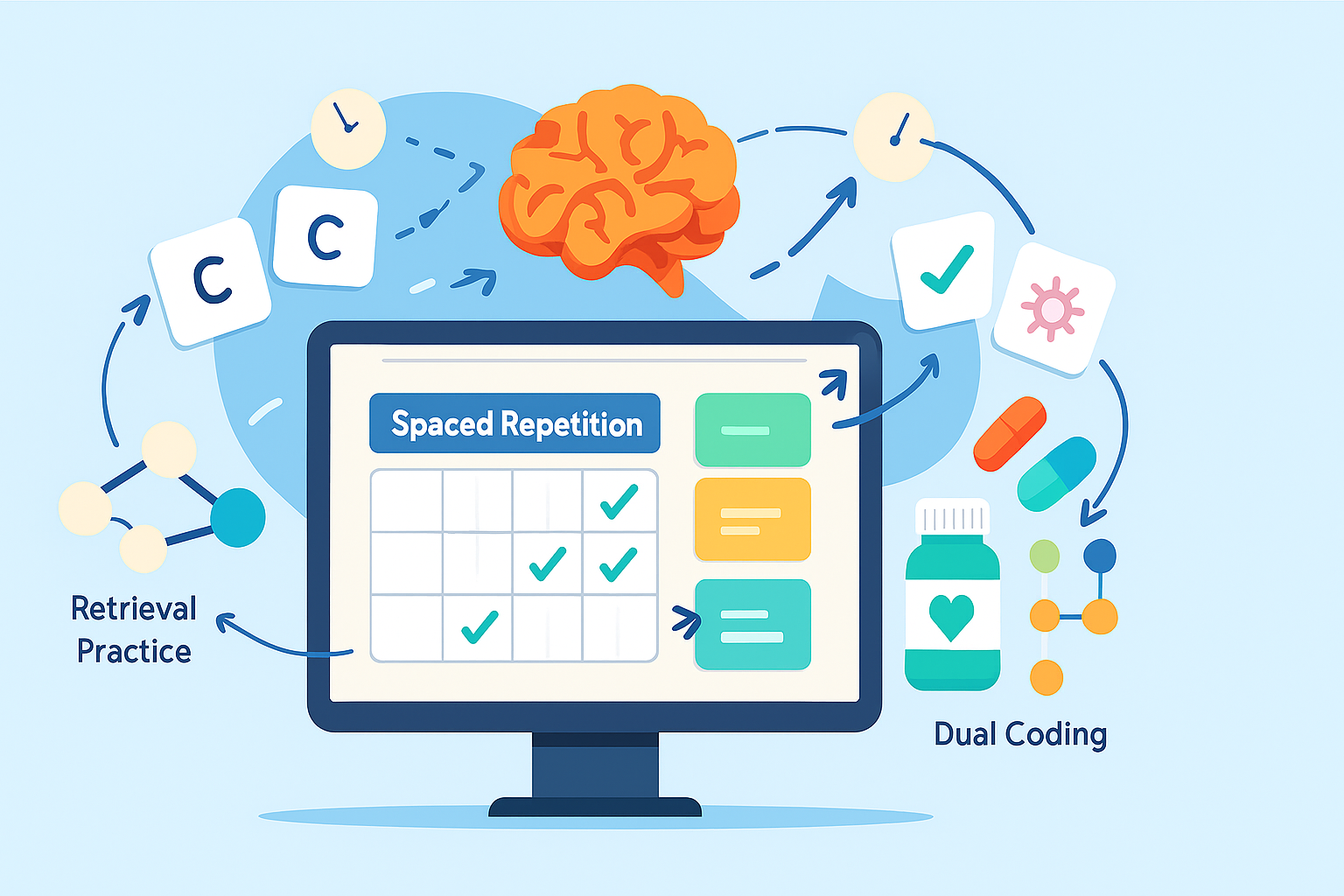
Incorporate MDSteps’ auto-generated flashcards from misses to reinforce mechanism-level reasoning. Over 4 weeks, this workflow creates a cognitive schema library—your internal Step 1 pattern bank—reducing cognitive load when facing novel stems. Remember: decoding is a skill; it grows with deliberate iteration, not passive exposure. Rapid-Review Checklist: How to Read Like an NBME Author
When you consistently analyze stems this way, Step 1 becomes less of a guessing game and more of a predictable, teachable algorithm—exactly what the NBME intended for those who truly understand medicine’s logic.
USMLE Step 1
Anatomy of a Step 1 Question: What NBME Stems Test
For NBME score plateaus and review
An NBME score report tells you what dropped. MDSteps helps show why it dropped.
Use MDSteps to sort NBME misses by weak system, reasoning trap, timing issue, distractor pattern, and readiness risk—then practice similar stems before your next assessment.
Full access includes Step 1, Step 2 CK, Step 3, CCS cases, analytics, auto-flashcards, and study planning.
Practice-exam repair
Turn missed NBME concepts into targeted blocks instead of passive note review.
Pivot-clue review
Identify the clue that should have changed your answer before the choices pulled you away.
Readiness tracking
See which weak areas and miss patterns still need work before another assessment.
MDSteps Full Access
Focus: Step 1 question decoding strategy — learn to read stems, identify patterns, and think like an NBME author to raise your accuracy rate per block.