
How to Pass Step 3 During Residency: 6-Week Plan
Use a realistic 6-week Step 3 study plan for residents balancing rotations, call, QBank blocks, CCS cases, biostats, and exam readiness.
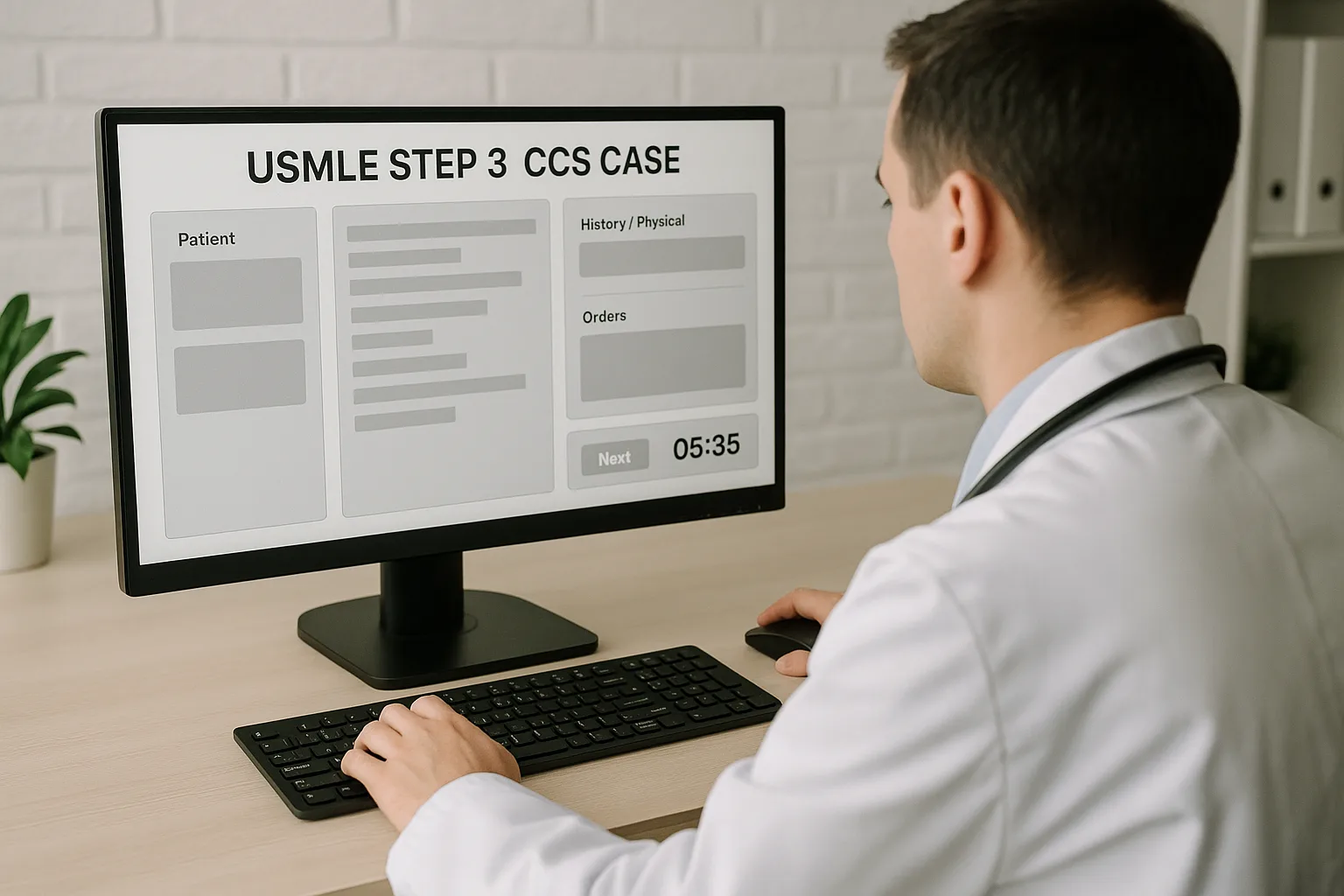
CCS CasesStep 3 CCS cases ask more than “what is the diagnosis?” They test whether you can manage a patient safely over simulated time: choose the right location, stabilize urgent problems, order focused diagnostics, start treatment, monitor response, reassess, and close with disposition and prevention.
Pick one guide that matches what you keep missing, then use MDSteps examples to practice that reasoning in question form.
1. Pick a guide below → 2. See how MDSteps teaches it → 3. Try a sample breakdown →These guides are meant to make the next vignette feel less confusing, not add another long reading assignment to your day.
Study the signs, labs, wording, and clinical setup that point you toward the most likely answer.
Practice separating the best answer from the option that only sounds close.
Use missed questions to decide what to review next instead of rereading everything again.
CCS practice should train location, urgency, stabilization, timed orders, reassessment, disposition, and prevention, not just diagnosis.
Start with location, urgency, stabilization, and initial orders.
Choose focused diagnostics instead of ordering everything at once.
Advance simulated time, monitor response, and reassess safely.
Close with disposition, counseling, prevention, and follow-up.
Use a realistic 6-week Step 3 study plan for residents balancing rotations, call, QBank blocks, CCS cases, biostats, and exam readiness.
CCS Cases
Learn how Step 3 CCS cases work, what the exam rewards, and how to practice timed orders, reassessment, and case closure.
CCS CasesBefore signing up, see how MDSteps supports Step 3 CCS practice with structured cases, order strategy, monitoring, timing, and review.